
- •
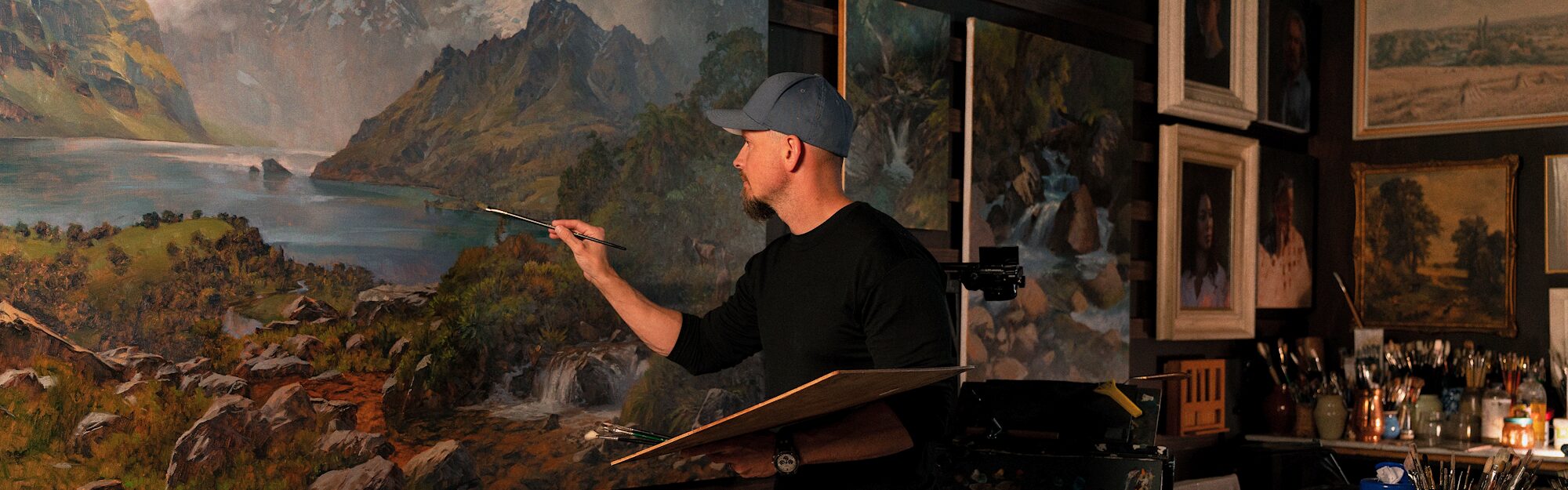
Studio Lighting
I still remember it like it was yesterday – I stepped into my dream studio – I was awe struck, impacted on such a deep level that over ten years later I can still feel this space. The only issue was, this studio wasn’t mine. It belonged to Russian born New Mexico artist, Nicholai Fechin, a master of portraiture. His space was large and vacuous – with white stucco walls, multiple areas for painting, sitting and thinking, reading, study and entertaining.
Large exposed, dark timber rafters held up the ceiling which pitched at different angles. The cavernous space had so much charm and character, yet it was massive! And it wasn’t just the space with its decorative details either, there was much more than that:
It was the LIGHT that made the space. This studio was bathed in natural light that flooded in from giant windows that faced the north.
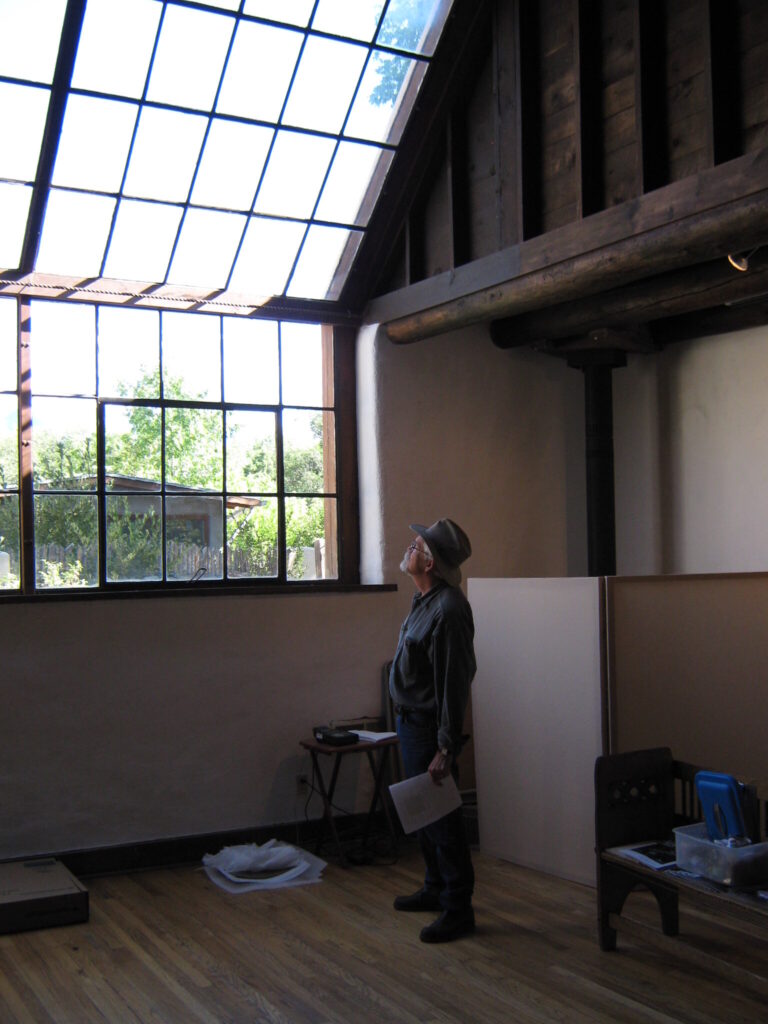
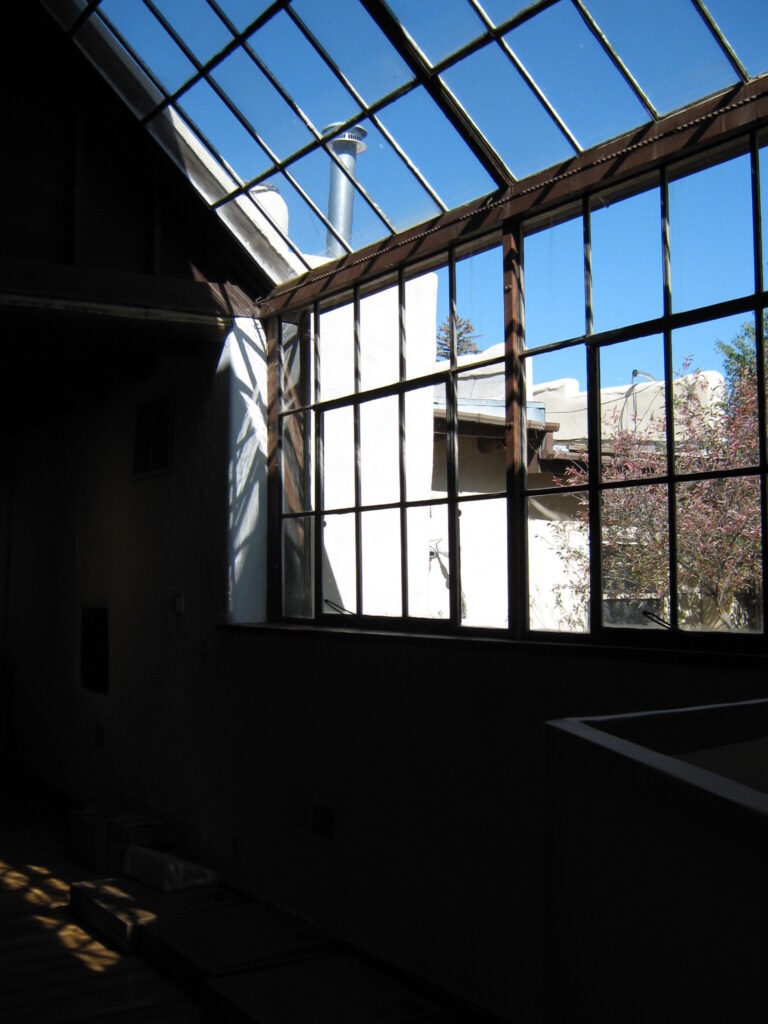
As I stood there, I thought to myself, this is what the dream looks like, one day, I’ll have a studio just like this…
Well, I’m sorry to say, I haven’t quite got the Fechin studio, yet, but I do have a pretty nice space, nonetheless. In this blog I want to share with you my approach to lighting in the hopes you can enjoy working under the consistency, and quality of the lights I work under, without breaking the bank, or trying to build a Fechin studio replica.
Not All Lights are Made Equal.
Let me take you back to the beginning, because I think the back story is important.
Silly me, I used to think the better the space was lit, the better the paintings. Makes sense, right? I equated “better” lights to more light. Lots of light! ALL THE LIGHT! I set up a workman’s halogen spotlight lamp on the ceiling rafter and promptly gave myself a sunburn while I worked. As I painted, I started to mix darker colors and cooler tones.
It turns out that I was compensating for the environment in which I painted. I mixed colder darker colors because of the abundance of brilliant yellow light. As I took the painting down and put it on the gallery wall, I found that the paintings were lifeless, cold and black. Lesson learned!
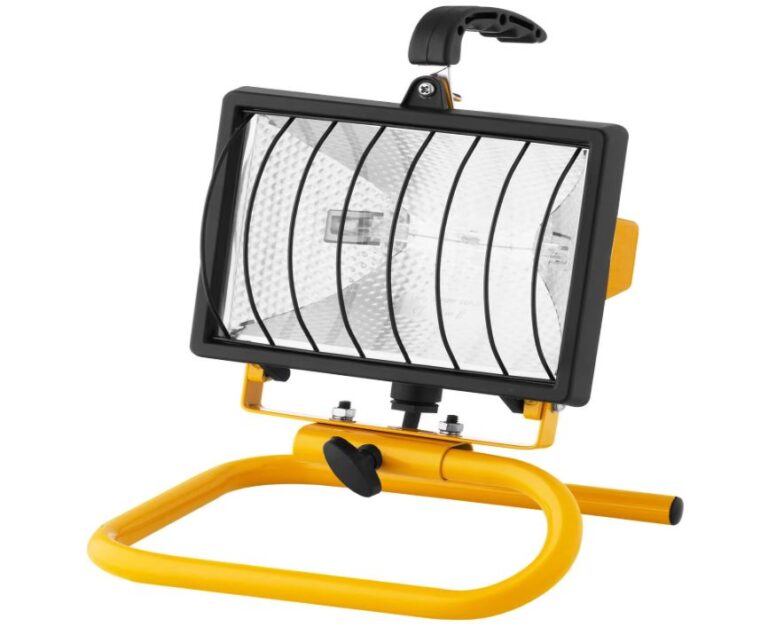
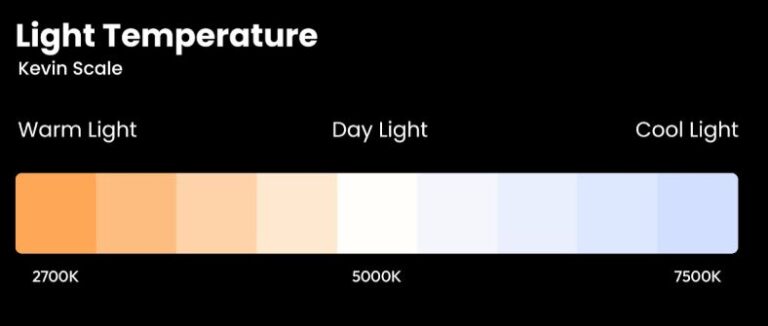
So I started to learn that light was measured in degrees Kelvin. The higher the kelvin, the cooler the light, the lower, the warmer the light. The workman’s floodlight had a very low Kelvin. So I figured, temperature is definitely a factor!
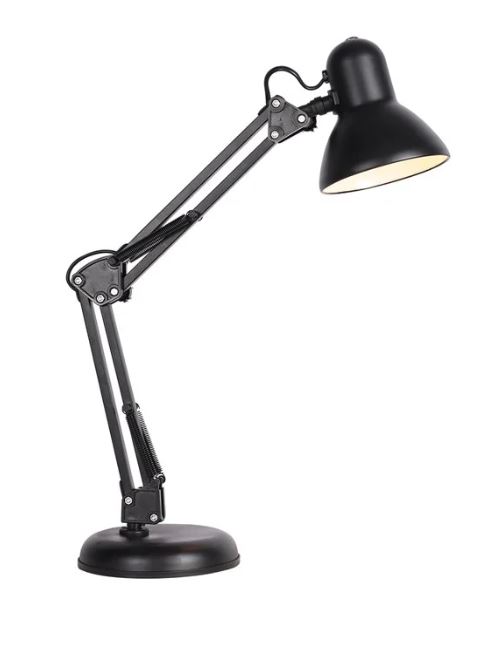
I promptly moved to hairpin lamps, you know the kind, we’ve all had them on our desks. I mounted two above my easel, and screwed in some compact fluoro bulbs. These were cheap. They were also readily available from the grocery store. I figured if I had a cool and a warm bulb in there, then they would balance out. This setup served me well for years.
But like the previous set up, it was far from perfect. If I was working on anything particularly large, I’d have one half cool, and the other half of the painting warm! Something needed to be done.
Side note – these compact fluoro bulbs contain high levels of mercury and become quite dangerous when they break. Please be careful if you install these lights!
Several paintings later and a few years down the track I moved into my big studio in Lawrence, South Island New Zealand. It was a large building, formerly the town drapery; it had been sitting vacant for years. I saw it and was inspired, like the way I was in Fechin’s space.
There was natural light flooding in from high windows that faced south. This natural light struck the wall from a high angle, and I thought about how even the cool light would be, scattered over a large canvas.
I made a video on the build of this studio. Check it out on my YT channel here.
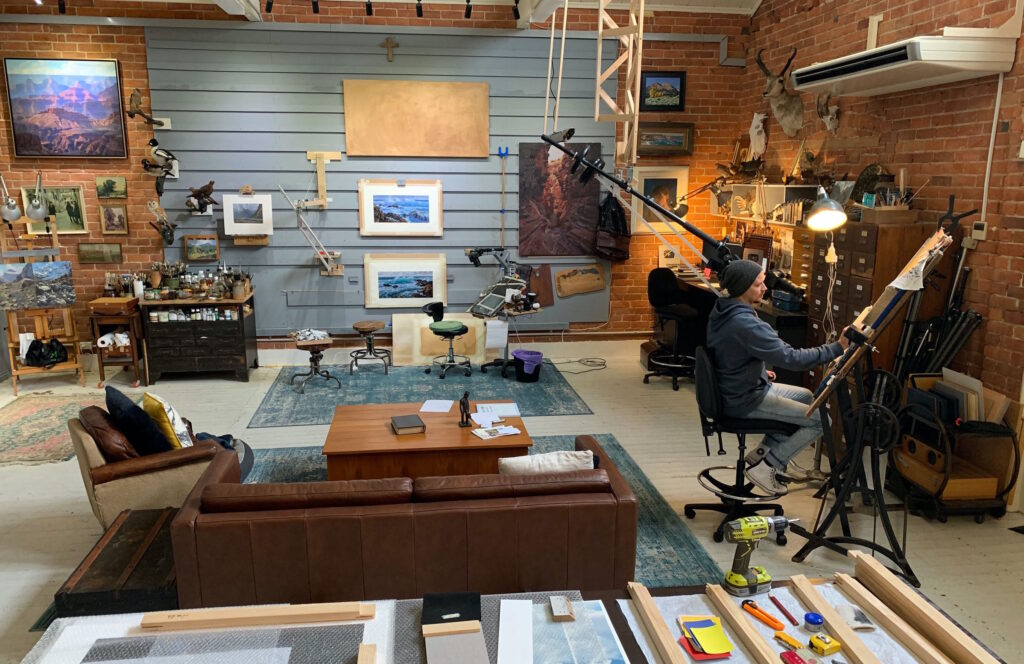
I’ve made a few “Studio Videos” since then. I’m forever moving so setting up painting spaces has become a bit of a distracting obsession since…
The natural light in the Lawrence studio was fantastic. But I decided to get clever, and I installed a spotlight array above the painting area. I used LED GU10 bulbs at 5000K. These had a 40 degree spread, so somewhat of a spotlight effect, but were nice and cool.
Now, in case you’re wondering, here’s a little chart of colour temperature. What I look for is that cooler side of white, anything between 4500 and 5500 degrees Kelvin. That’ll give you a color of light that is similar to open ambient sky, mimicking natural light.
So why the supplemental LED array? So this was in the form of a track light, with 6 bulb-barrels installed. I thought that as the day shifted and as my hours of painting were early in the morning to sometimes late in the evening, when the sun goes down, I better have light to work! Right?
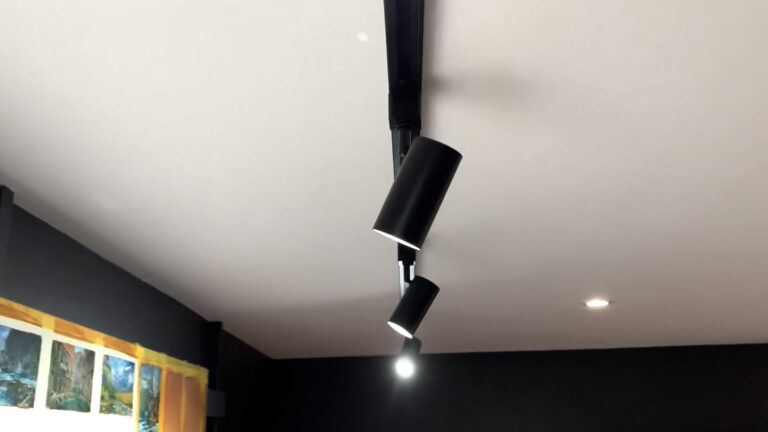
I made sure my track lighting was dimmable so I had an electrician install a dimmer switch, and as the day drew on, I turned the lights up and down accordingly.
There was, however, another issue. Everytime I touched my brush to the canvas, several sharp shadows appeared below my brush. Each one triangulating at the end of the brush, it got quite annoying!
There was also another issue, and at the time, I hadn’t quite picked up on it. There’s another important number that we have to consider, and that’s CRI. I had no idea what this was, and consequently, my work suffered, as did my painting experience.
CRI is a measurement of the quality of light from 0 to 100. Sunlight is 100 – it’s throwing out every color, full blast. Every wavelength, every color is thrown out from the sun, giving us a wonderful, full color experience.
Artificial lights however, throw out only a limited scope whilst at first we may perceive every color there, it falls short of sunlight. There’s only a few colors emanating form the bulb, and some more that others.
Consider these two charts, one represents sunlight, and the other, some basic off the shelf LED bulbs at 80 CRI. Notice the massive blue spike on the bulbs?
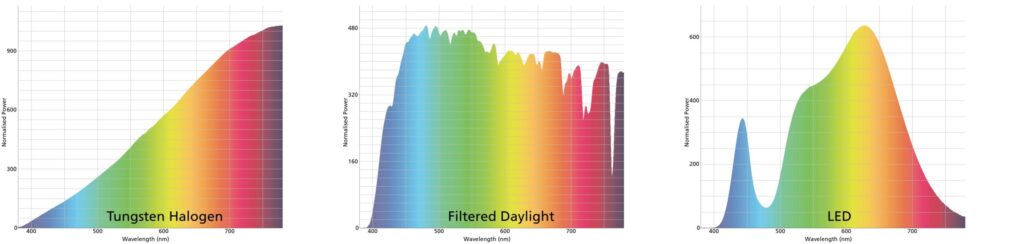
Now, in this new space, there is NO natural light whatever. So I needed something that would give me even light, high CRI, dim, 5000 degrees Kelvin and an even glow with no sharp shadows!
I opted for YUJILEDs (not a sponsor) – these bulbs are high CRI (98+) and when installed in a softbox dome they throw a beautiful even light that’s around 5000 degrees Kelvin. Nearly perfect. The only gripe I have about my new space is there is no natural light, which I would prefer, there’s only artificial lighting, that I’ve installed. Sigh.
Still, this setup gives me the consistency and the quality I’m looking for. Whether I’m filming a demo or working on a commission, I can work any hour of the day and enjoy the same consistent quality of light.
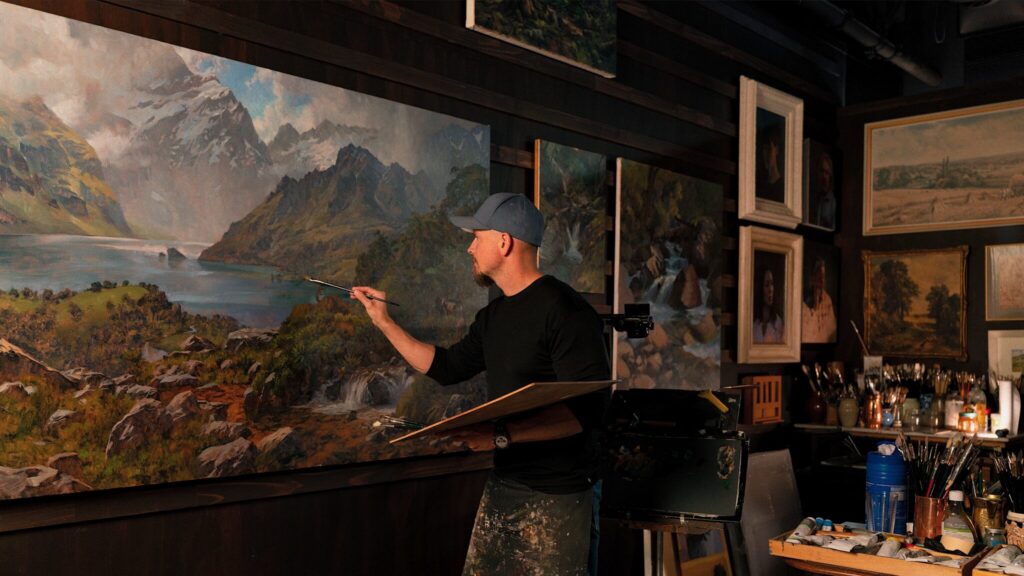
I’m blessed to have my very gallery, called Tischer & Co Fine Art Gallery. I also consider the lighting in this space carefully. The lighting here is LED once again, but I shifted the temperature purposefully. I hang my paintings under 4000K spotlights, causing a warmer tone.
Because I was creating the work in dim cool light, the contrast is apparent immediately. Suddenly, the paintings appear so much richer and warmer, not only because of the difference in lights, but because of how I compensated for the dim, cool conditions in the studio.
I sincerely hope this helps you, if you’ve struggled with lighting and needed to work through similar challenges.
If you’re looking to set up your space, navigate your oil paints and set up a palette, learn what each brush does, and how to create your next masterpiece, follow along on Tisch Academy! We upload fresh content each week. We’re an exclusive community of three and a half thousand, and growing!
Happy lighting, and happy painting!
Tisch
Never Miss a Post!
Keep up to date with videos, livestreams, blog posts, print drops and much more!
5 responses
This review is helpful. I currently have a small work space with northern light (I am in the northern hemisphere). I have a new larger space to build out my dream studio. My new space has southern light I am going to put a photo diffusing screen over the south windows shutters. But I will look for the best 5000 Kel lights to install…and a French cleet wall.
Note that the blue spike in the LED light’s spectrum is the blue pump LED. The ‘pump’ the underlying drive LED that produces light power that energizes the phosphors (on the LED or remote) that then radiate light at the different wavelengths for different phosphors used to make the spread of light across the light spectrum. More phosphors mean better fills across the spectrum, and usually a better balance so the blue pump LED’s energy is used up enough that there’s little or no meaningful blue spike.
Watch out for some higher end high CRI LED bulbs that use an UV LED as the pump, as the devices those bulbs are mounted in need to filter out the underlying UV that leaks through or else they’re radiating UV at you and your art.
98+ CRI is great! Most will be happy at 92 CRI and up, which can be more economical. Forget under 88 CRI and avoid under 92 CRI if you can afford it.
A light-box/soft-box gives you ‘softer’ light, as in less specular, soft edged shadows. Direct sunlight with nothing diffusing the light gives ‘hard’ light (more specular), for hard edged shadows; great for showing details. Less of a difference is that between bare bulbs and frosted bulbs, with the frosted bulb giving somewhat softer light.
You can fake a light box as DIY with literally a cardboard box with the bottom & sides lined with shiny aluminum foil and a sheet of white rip-stop nylon across the front. Stick your high CRI 5000K LED bulb shin in through a hole in the bottom (don’t stick it inside unless you know its heat can get away!!!) That avoids any colour shift of light reflecting off the insides of the box while also reflecting that light out the front where you want it. The white rip-stop across the front is your light softening diffusor. You’ll likely need to try boxes of different widths and depth to find what that works the way you want with your bulb.
If you have direct sunlight coming but need to tame those harsh shadows, hang a sheet of white ripstop nylon up as a light diffuse, or even a cotton sheet that is white that won’t shift the colour. But you’re on a shifting colour dance, as the mix of yellow sunlight vs. blue sky vs. white cloud determines the light colour mix that’s coming in, changing from season to season, and day to day, and within a day. Natural light is nice, but be aware of its variable nature, and that an electric source allows you to have consistency. Natural light is great for ambient, with selected & managed electric for a canvas work-light. With photography, prints can be made with a colour balance custom selected for the light source they’ll be viewed under by the owner, so what they see is ‘correct’. I haven’t heard of this being done for paintings – yet.
With light boxes, watch out for their causing a colour shift or fallout at one or more wavelengths within the spectrum. You want one that doesn’t alter the colour temperature. Also, not all produce even light intensity across the width of their stated “coverage”. You don’t want one end of a wide canvas end up looking like it’s under a partial eclipse. Usually costs more to get one designed for and with the quality control to get within 1/10 of a f-stop across it’s entire radiating surface.
comment under moderation took out the space between points…
A reasonably priced ($200USD each) system with full flexibility can be had with two or three LED panels such as the ones I have mounted to my ceiling. ( https://www.bhphotovideo.com/c/product/1468139-REG/genaray_rsf_11_mini_moon_11_bi_color.html )
They throw a broad light, have a CRI of 96, are adjustable with the included remote in both intensity and color temp (3200K to 5600K). I prefer to use them set at 4400K to match most gallery lighting; currently they seem to be using halogen but are switching to LED for economy and lifespan. I try to adjust the lights for the most even light distribution on both easel and taboret/palette, and dim them to around 750-850 lumens which is about the average intensity for their paintings I’ve measured in a couple of galleries.
I like this because of its consistency in the studio day or night, and because it comes close to probably being similar to display conditions in a gallery.
thanks for info.